Do You Download Game Onto An Ssd If You Get An Ssd And A Hard Drive
The steam directories option is better if you plan on never moving your game files after you've installed them. With limited SSD space it's nice to move a game over to the SSD until you're done playing it and then move it to a storage drive.
That's just referred to as installing an application/game to the SSD/HDD and where it's installed is the 'install location' or 'installation path'. Download is normally just used when you want to save files onto your SSD/HDD prior to anything being installed. Oct 11, 2012 - What do you do when you have so little space? Installing a game on a solid state drive can have a huge impact on load times, but a single. Feb 16, 2015 How do I install on my steam game on my on my hdd instead of my ssd? How to install games on hdd instead of ssd. Thread starter teresa_hamby; Start date Feb 16, 2015; Forums. Install game on Desktop and External Hard Drive that. How do I download a Game from steam onto my SSD. Hard Drives Storage Games Systems Download SSD Steam. How would I easily download/install games on either drive?
A hard drive upgrade is one of the easiest ways to improve your PC, whether you’re looking for more storage or the speed boost an SSD provides. Here’s how to choose and install your new drive.
Step One: Choosing Your New Drive
Choosing a drive that fits your budgets and does what you need is the first step. These days, your most important choice is between a traditional hard drive or a solid state drive (SSD). But there are few other things to think about, too.
Should You Get Regular Drive, an SSD, or Both?
Do You Download Game Onto An Ssd If You Get An Ssd And A Hard Drive Work
Here’s the question to ask yourself: do you want more speed or more storage?
RELATED:What Is a Solid State Drive (SSD), and Do I Need One?
Modern SSDs are amazing, and are a worthy upgrade to just about any system. Moving from a regular drive to an SSD improves speed across your system. You PC will start faster, load apps and large files faster, and decrease load times in most games. The trouble is, once you get past a terabyte of storage space, SSDs start to get prohibitively expensive.
Alternately, conventional hard drives are slower, but offer huge amounts of storage relatively cheaply. You can find desktop drives that hold four terabytes—enough to satisfy all but the most demanding of media hoarders—for under $100 USD.
You can also combine the strengths of SSDs and hard drives. If your desktop can handle more than one drive (and most of them can), you can install your operating system on the main SSD for speedy access to programs and essential files, and use a large capacity traditional drive for storing files. This makes an SSD an especially attractive upgrade if you already have a hard drive, since you can move the operating system over and “demote” the hard drive to storage duties.
If money is no object—or if you’re limited to a single drive connection in your laptop—you can spend quite a lot to get a multi-terabyte SSD. But for most people, a smaller SSD combined with a larger hard drive is a great compromise.
What Physical Size Should the Drive Be?
Hard drives typically come in two sizes: 2.5″ and 3.5″. The 3.5″ drives are also known as “full size” or “desktop drives.” Pretty much every desktop PC out there has room for at least one (and sometimes many) 3.5″ drives. The possible exception to this are the super-small form factor PCs that can only handle a 2.5″ drive.
2.5″ drives are traditionally meant for laptops, but will also fit just fine in a desktop PC. Some desktop PCs have built in mounting points for 2.5″ drives. If yours doesn’t, you’ll need a mounting bracket like this one. Note that these are usually labelled as “SSD mounting brackets.” This is because all SSDs in the traditional hard drive form are 2.5″ drives. That’s what size you’ll use whether you’re mounting it in a desktop or laptop.
RELATED:What Is the M.2 Expansion Slot, and How Can I Use It?
And speaking of SSDs, there is one more form factor to talk about: the M.2 standard. These drives actually look more like a stick of RAM than a hard drive. Instead of connecting to your motherboard via a SATA cable the way regular drives do, M.2 drives get plugged into a specialized slot. If you’re interested in the M.2 drives, you’ll have to determine whether your PC supports them.
One other note about laptops. As they’ve gotten smaller and sleeker, laptops have also gotten harder to upgrade. Most laptops that aren’t super-tiny still use 2.5″ drives, but they may or may not have a user-accessible drive bay for upgrades. Cheaper, bulkier laptops, and few business-class designs like Lenovo’s ThinkPads or Dell’s Latitudes, still allow access fairly easily. Other models might need some extensive work to get to the drive bay, or may not have access at all, especially if they’ve moved to the expensive M.2 standard. Upgrading those drives will probably void your warranty, and you’ll need to look for a model-specific guide, like this one on iFixIt.
What Connection Do I Need?
All modern 3.5″ and 2.5″ drives use a SATA connection for power and data.
If you’re installing the drive into a desktop PC, the SATA power cable is a 15-pin cable that runs from your PC’s power supply. If your PC only offers the older 4-pin Molex cables, you can buy adapters that work just fine.
The SATA data cable requires that your motherboard support a SATA connection (all modern PCs do). You’ll find them in slightly different configurations. Some (like the one pictured below) have a straight plug on one end and an L-shaped plug on the other end. The L-shaped plug makes it easier to fit into jacks that are closer to other components. Some SATA cables have straight plugs or L-shaped plugs on both ends. You should get SATA cables with your hard drive, but if you’re working in a particularly tight space, be aware that these other options exist.
If you’re installing into a laptop that allows user access, things are easier. You’ll usually be able to plug the drive right into a slot that already has the power and data connections ready—no cables to connect.
One other word on SATA drives. The latest revision to the SATA standard is SATA 3.3, and drives and cables are backwards compatible with older versions. On desktops, you’ll want to make sure that the drive you’re buying is as fast or faster than the connection that your motherboard accepts—most motherboard SATA connections from the last five years have at least 3.0 support. The same goes for the SATA cable you buy. Laptops don’t use SATA cables, so just make sure that the drive you’re upgrading to uses the same SATA revision or newer than the drive it’s replacing.
How Much Storage Do I Need?
This one’s easy: whatever fits your budget. More storage costs more money, no matter what type of drive you’re looking at.
How Fast Does My Drive Need To Be?
The default answer here is “as fast as you can afford.” That said, if you’re upgrading from a hard drive to an SSD, you’re going to be blown away by the speed increase no matter what. So you might not want to splurge on the fastest SSD you can get. Getting more storage on an SSD will be more important to most people than getting more speed.
If you’re buying a regular drive, speed is generally expressed in RPM—the revolutions per minute of the spinning data platters. 5400 RPM is a typical speed for inexpensive drives (especially in 2.5″ form factors), with 7200 RPM drives also being quite common. Some high-performance hard drives are offered at 10,000 RPM, but these have been mostly superseded by faster SSDs.
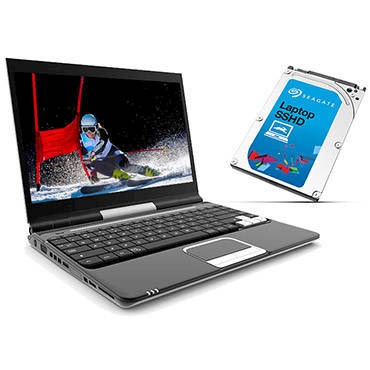
There’s another option here, if your choice is limited to a conventional hard drive. “Hybrid” drives combine a large, standard hard drive with a small cache of flash storage. This won’t magically make your hard drive as fast as an SSD, but the file caching can make a considerable improvement if you’re constantly accessing mostly the same programs and files. It might be worth the small price premium versus a standard hard drive.
Step Two: Decide Whether to Transfer Your Operating System or Perform a Clean Installation
You’ve purchased your new drive, and you’re ready to install it. Your next step is to decide whether you want to transfer your operating system to the new drive or just do a clean installation and start fresh. There are pros and cons for each.
Transferring Your Operating System
Transferring your operating system (and all your data and installed apps) means not having to worry about reinstalling Windows, setting it up the way you like it again, and then reinstalling each of your apps. The downside is that it’s a pretty slow and tedious process.
RELATED:How to Upgrade to a Larger Hard Drive Without Reinstalling Windows
If you’re upgrading from only one drive to another (as opposed to simply installing an additional drive in a desktop), you’ll probably want to transfer your operating system to the new drive instead of installing fresh. The bad news is that this is a slow and tedious process. The good news is that it isn’t too hard to do. Most new drives come with tools to make it happen. And if you didn’t get a free tool, there are other ways to upgrade to a larger hard drive without reinstalling Windows.
If you use a laptop, you’ll need to use a USB-based SATA adapter or enclosure so that you can have both drives hooked up at once. You can go that way with a desktop, too, but it may be easier just to install the new drive, do the transfer, and then decide whether to leave the old drive in place for extra storage or uninstall it.
Performing a Clean Installation
RELATED:How to do a Clean Install of Windows 10 the Easy Way
There are also advantages to just performing a clean installation of your operating system on your new drive. The big one is that you get to start fresh. No old program installations hanging around; it’s a fresh copy of your OS without the clutter. You get to set it the way you want, and only install what you want.
The downside, of course, is that you have to do all that. While it typically goes faster than transferring your OS to the new drive, doing a clean installation does mean that you’ll have reinstall the apps and games you want, and restore your personal files from backup (or copy them from the new drive). You’ll also need make sure you have access to your applications for reinstallation. If you installed them from DVD or downloaded the installation files, you’ll need to find those—along with any necessary activation keys.
Step Three: Install Your New Drive
The steps for installing (or replacing) a drive differ a bit, depending on whether you’re installing the drive in a laptop or desktop PC.
Installing Your New Drive In a Laptop
Different laptops have different methods for accessing the storage drive compartment, if they allow easy access at all. Some business-class designs let you swap out a drive by removing a single screw, others might need you to completely remove the bottom of the machine or even take out the keyboard. You can usually find specific instructions by searching the web for your laptop manufacturer and model.
For this example, we’re swapping the drive in a ThinkPad T450s. The design is a few years old now, but it’s small enough that it requires the entire bottom to be removed, which is fairly typical among designs that allow a hard drive upgrade.
To access the drive, I have to remove the battery, and then take out eight different screws.
That loosens the metal body plate enough to let me pull it off the computer. You can see the hard drive in the lower-left corner.
Download Minecraft for free and build your own world over and over again! Minecraft may not look like a real world, but it does what it can to feel like one. Real life minecraft game download. Nov 3, 2014 - This mod bring Minecraft to real life! Make Minecraft more real with this epic mod. This Minecraft mod makes Minecraft more realistic and also. About the Mod: The Real Life Mod aims to bring a realistic feeling of life into. Challenges, games and elements of real life. Real Life Mod 0.43.jar 320,655 Downloads minecraft v1.8 Uploaded September 25 2015, 12:49pm. What does this mod do This mod makes minecraft more like the real life. 4 diamonds; 27,626 views, 15 today; 3,806 downloads, 0 today; 4 comments; 5 favorites. Realistic 3D-Trees and tree chopping, as you see it in the game 'The Forest',.
To pull the drive itself out, I need to remove another screw, pull the drive up a bit, and then slide it off of the integrated SATA connection.
For this model, the drive caddy is just a thin piece of aluminum with a rubber bumper. I pulled it off, and then placed it on the new drive.
Do You Download Game Onto An Ssd If You Get An Ssd And A Hard Drive In Computer
Then, I reverse the process, slipping the new drive onto the SATA connection in the laptop, screwing the caddy back down to the frame, and replacing the body panel.
Again, this process is going to vary quite a lot depending upon which laptop you have. If you need a step-by-step breakdown for your model, Google is your friend—you’ll generally find at least a few users who want to do the same thing, and maybe an article or video if you’re lucky.
Installing Your New Drive in a Desktop PC
This process is a bit more involved than on a laptop, but the good news is that getting the case off and accessing the drive is typically a lot easier than on most laptops.
You’ll need a standard Philips-head screwdriver and a SATA cable. If you’re completely replacing a single drive, you can use the SATA cable that’s already in place. Your power supply probably has a free SATA power connection—multiple plugs are often available—but if not, you’ll need an adapter cable. If you’re working in an area that’s particularly prone to static electricity, you’ll want to use an anti-static bracelet as well. If you built your own PC, the screws needed to install your new drive should have come with the case—I hope you kept the box of accessories. If not, you’ll need to get some replacement screws. Finally, you’ll want a bowl or a cup to hold screws.
Power down your machine and remove all cables, then move it to your work area. This should be a cool, dry spot that’s easy to access, preferably without carpet below you. If you know the configuration of your computer’s internal parts, feel free to place it at the most accessible angle. If you don’t, just leave it upright—you may have to take multiple panels off for a full installation.
Remove the access panel from the primary side of the case—that’s the one on your left if you’re looking at your computer from the front. Most designs require you to remove two to three screws from the back side before it will slide or swing out. Set the access panel aside. Some desktops require that you take the whole case cover off rather than just an access panel. If you’re unsure, look up your desktop model or case on the web. Instructions should be easy to find.
Take a moment to orient yourself. If you’re working on a conventional desktop you’re probably looking at the motherboard, with the boxy power supply either at the top or the bottom of the case. You should be able to see your computer’s storage drive or drives mounted towards the front of the case. A SATA data cable should be running from the motherboard to the drive. A SATA power cable should be running from the power supply to the drive.
Note: If you can’t see either a larger 3.5-inch drive or a smaller 2.5-inch drive, it might be mounted in an alternate spot. In newer designs this is often behind the motherboard itself—remove the opposite access panel to check.
If you’re not keeping your old drive in your system for extra storage, now’s the time to take it out. You can also leave the cables attached to the motherboard and power supply and then just connect them to the new drive after installing it.
Do You Download Game Onto An Ssd If You Get An Ssd And A Hard Drive Time
First, unplug the data and power cables from the back of the old drive. There’s nothing too complex about this: just pull it out. Some cables have a little tab locking mechanism you’ll have to squeeze first.
If the drive is on a sliding caddy, remove it (and note that some sliding caddies are screwed into place). Now, just use your screwdriver to remove the screws from the drive, whether it’s in a caddy or affixed directly to the case. The screws come in many sizes and lengths—some including silicone spacers for sound damping—and might be mounted to the bottom of the drive or the side, depending on your case’s design. It doesn’t really matter: just remove them, set them aside in a spot where you won’t lose them.
Your old drive is now free! Set it aside. Be careful with it, but don’t worry too much—they’re pretty sturdy.
To install the new drive in place of the old one, you’ll just reverse the process. Put the new drive into the caddie, and then slide it into place on the case (and secure it if necessary).
Now, plug the cables into the new drive. It’s easy to figure out—they only fit one way.
If you’re adding a new hard drive and leaving the old one in place, it’s a bit more complicated. You’ll need to mount the new drive to the case (sliding it into an extra caddy that should have come with your case, if necessary). And, you’ll need to plug in additional cables.
Plug one end of the SATA data cable into the back of the new hard drive and the other end into your motherboard. The motherboard slots are generally on the side closest to the front of the PC, usually in a cluster of two to six. It doesn’t particularly matter which plug you use, though you might want to plug it into the top-left one (which is the “0” drive) or the closest one in sequence, just for the sake of organization.
Now plug the SATA power connection from the power supply into the new drive. If you already had a drive installed, check the power cablecoming out of it, because they generally have more than one plug and can be used for multiple drives. If your power supply doesn’t have any free SATA power connections, you’ll need to use an adapter or a splitter.
After that, your drive should be ready to go! Double check your connections, make sure the cables aren’t touching any heatsinks or bumping up against cooling fan blades, and then replace the access panel on the case. Move your PC back to its original position, reconnect all your accessories and power cables, and fire it up!
Image source: Amazon, Amazon, Amazon, Amazon, Newegg, iFixIt, Lenovo
No matter what platform you're playing Anthem on, you want the best experience possible. In order to get that experience on PC, you'll want to play it on a solid-state drive (SSD) as opposed to a hard disk drive (HDD).
What's the difference between an SSD and an HDD?
SSDs and HDDs are components of a PC that deal with storage. The biggest difference between them is that an SSD has no moving parts and data is stored on flash-memory chips. HDDs use moving mechanical parts to read/write information, thus making the process slower than that of an SSD.
SSDs also tend to be smaller and quieter than your average HDD, but they cost slightly more in comparison because of their better performance and the technology utilized in them.
Why does Anthem run better on an SSD?
Video games require fast-processing to ensure a smooth experience. Everything you see on screen? All of that is data that needs to be read and transferred at lightning-fast speeds in order to render seamlessly. When this doesn't happen, that's when you're stuck with long loading times. Because of the interactive nature of games, any hiccup that causes a latency issue is immediately noticeable. If this happens many times over, it's frustrating. This is doubly true for Anthem.
As an online multiplayer game, Anthem relies on fast loading and response times so that players can have a fun experience. Because SSDs are more reliable in terms of their speed, this generally makes them better for games such as Anthem.
How does this effect Anthem's gameplay?
An SSD won't affect such aspects as your frame-rate or resolution, but it does drastically affect load times and 'hitching' in games. Hitching can be described as when a game starts to stutter, unable to load assets at a quick enough speed to match the player's movement. For example, if you're running really fast throughout a level, you may notice that the camera movement isn't smooth and appears to stutter, or that assets in the environment take a moment to pop in. Sections of the map may not even load correctly.
The faster the data is read in Anthem's case, the faster players can load into expeditions and missions, and prevent severe hitching and pop-in from happening during gameplay. During missions, especially Strongholds, Anthem will sometimes drop players into a loading screen before progressing to a new area to continue. When this happens several times, you end up falling behind your friends. The gameplay doesn't stop just because one person is stuck on a loading screen. And because missions keep groups tethered, if you don't stay close to your squad you'll end up at yet another loading screen.
Though there is a patch in the works to optimize HDD loading times on 5,400 RPM and 7,200 RPM drives, it's still best to stick with an SSD on PC as that will undoubtedly provide the best experience.
Our SSD pick
Samsung 860 PRO Internal SSD
Quality and affordable
The Samsung 860 PRO Internal SSD was built for gaming and high-end computing. You'll be sure to get the most out of Anthem at an affordable price by picking this up. And if you're looking for a bit more storage than the 256GB has to offer, you can purchase larger models if you're willing to pay a higher price.
Game on
Anthem
Become a Freelancer
BioWare's Anthem throws you onto an alien world full of wonder as you're tasked with protecting the citizens of Fort Tarsis with your very own 'Iron Man' suit called a Javelin. Fly around and discover the mysteries that await.
This post may contain affiliate links. See our disclosure policy for more details.